

Scaling Global Knowledge-Sharing
Overview
This project is a high-impact internal knowledge-sharing program that I revitalized and scaled to bridge communication silos between global Engineering, IT, and Product teams. By orchestrating and hosting over 183 sessions to date, I transformed an ad-hoc meeting series into a sustainable operational ritual that fosters cross-functional innovation and continuous learning. My role involves managing the end-to-end lifecycle of each event, from speaker coordination and stakeholder alignment to maintaining a searchable digital archive for the entire organization.
My Role
Program Lead & Operations Coordinator
Project Duration
Mar 2018 - Present
Tools
Microsoft Suite, Google Suite, Video editing software, Teams
Summary
The Challenge
With a rapidly growing global workforce, Infoblox faced a significant "knowledge silo" problem. Engineering, IT, and Product teams were innovating in isolation, with no centralized ritual to share best practices, new technologies, or project wins. The existing ad-hoc sharing was inconsistent, poorly documented, and inaccessible to global time zones.
The Solution: Internal technology, architecture, and design based talks
I revitalized and scaled the program, a bi-weekly internal knowledge-sharing series. I transformed it from an informal meeting into a structured, high-engagement program that has successfully hosted 183 sessions to date. I acted as the central hub between subject matter experts (SMEs), global leadership, and the broader engineering organization.
To ensure the program's sustainability, I built an operational framework focused on:
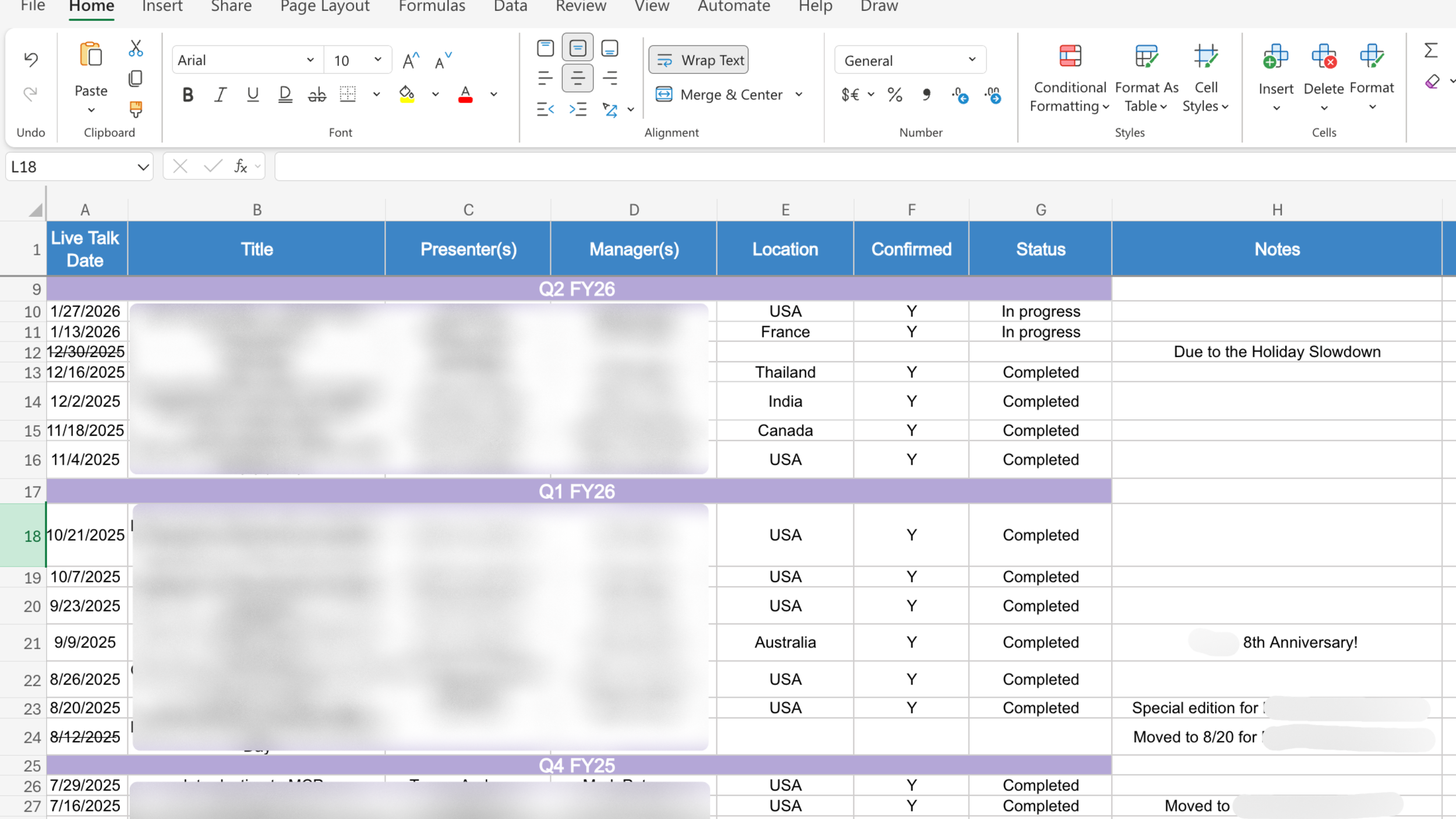
Stakeholder Coordination: I managed a rotating queue of speakers, coaching SMEs on presentation clarity and technical accessibility.
Operational Artifacts: Created a centralized event calendar and a standardized committee to streamline the onboarding of new presenters.
Global Logistics: Managed the end-to-end execution of live sessions, including scheduling across time zones, hosting/moderating, and technical troubleshooting.
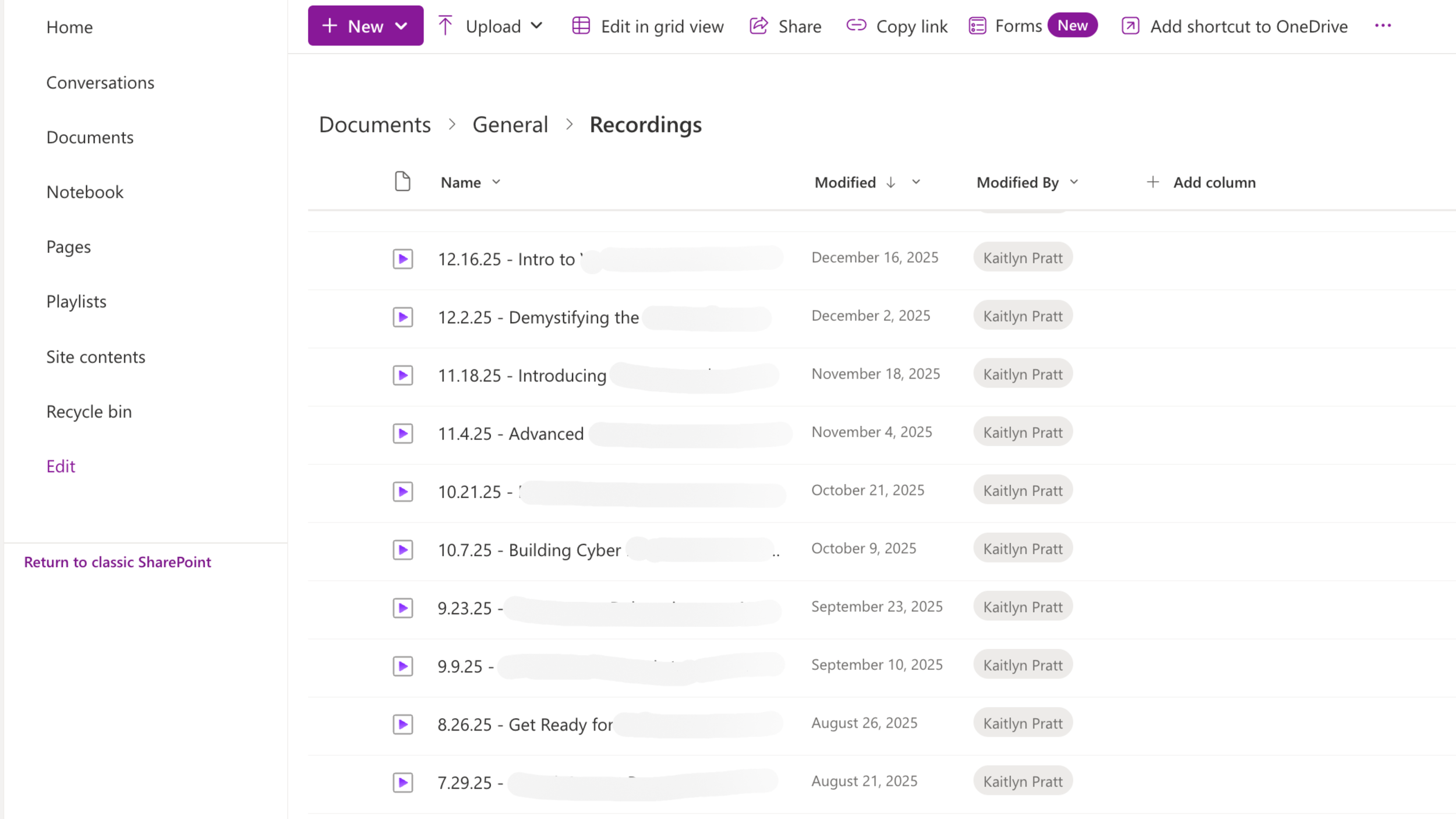
Content Lifecycle: Oversaw post-event workflows, including video editing, recording archival on the engineering intranet site, and managing a searchable database of past topics.
The Process
To ensure the program's sustainability, I built an operational framework focused on:
Stakeholder Coordination: I managed a rotating queue of speakers, coaching SMEs on presentation clarity and technical accessibility.
Operational Artifacts: Created a centralized event calendar and a standardized committee to streamline the onboarding of new presenters.
Global Logistics: Managed the end-to-end execution of live sessions, including scheduling across time zones, hosting/moderating, and technical troubleshooting.
Content Lifecycle: Oversaw post-event workflows, including video editing, recording archival on the engineering intranet site, and managing a searchable database of past topics.
Results & Key Takeaways
Managing a long-term program isn't just about scheduling meetings; it’s about building a repeatable and reliable system. I learned that by lowering the barrier to entry for speakers (through templates and clear guidelines), you can maintain high-quality outputs even with a lean operational team.
Process Efficiency: Reduced speaker prep-time by 30% through the introduction of a templates and clear guidelines.
Knowledge Base Expansion: Curated and managed a digital archive of 183+ sessions, with at least 5 talks per quarter, resulting in a 24/7 self-service learning library that serves as a primary resource for global teams.
Engagement Growth: Scaled program participation to reach 1,000+ global employees across Engineering, Product, and IT, ensuring equitable access to technical knowledge.